



Description
Digital marketing is a booming field that offers countless ways to earn online income. In fact, the global digital marketing industry is forecast to hit roughly $472.5 billion by 2025hostinger.com as companies pour more budget into online ads, content, and analytics. This means businesses of all sizes need savvy people to help drive traffic, sales, and brand awareness via the internet. For beginners eager to make their first online income, digital marketing presents a wide-open frontier – from freelance gigs and affiliate programs to content creation and online courses, each path can generate cash with the right approach.
Getting started can feel overwhelming. But whether you’re excited by social media, writing, SEO, or analytics, there’s an approach that matches your skills. In this guide, we break down proven strategies and fresh perspectives on how you can turn digital marketing know-how into actual money in your pocket. We’ll cover high-impact methods like freelancing, affiliate marketing, creating digital products, and more. Along the way, we’ll pull in industry stats and expert insights to show you which paths are thriving today. By the end, you’ll have clear ideas for actionable steps to begin earning through digital marketing.
Understanding the Digital Marketing Landscape
Before diving into specific tactics, it helps to see why digital marketing is so lucrative today. Global online advertising and marketing budgets keep climbing. For example, the worldwide digital ad market is expected to reach about $843 billion in 2025hostinger.com. Companies are shifting ad spend from traditional to digital channels – nearly 51% of marketing budgets now goes to paid digital media and techhostinger.com. In fact, 82% of marketing leaders say they’re increasing investments in digital channelshostinger.com.This surge is fueled by more people using the internet and shopping online every year (over 5.35 billion users globally in 2024hostinger.com) and by new tools like AI for ads and social media. All this adds up to huge demand for digital marketers. Businesses need freelancers, consultants, and in-house talent who can run SEO campaigns, manage social ads, design content, send email newsletters – you name it. In short, the demand is strong and growing. Any beginner who develops even basic skills in areas like SEO or social media can tap into these budgets.
Top Strategies for Earning with Digital Marketing
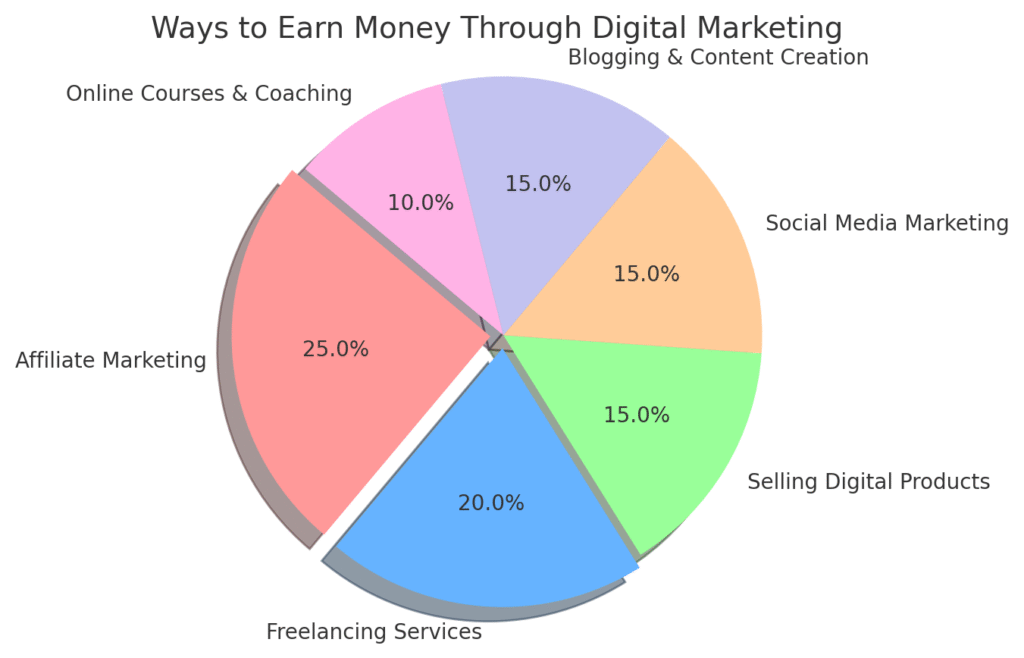
There’s no one single “best” way to make money in digital marketing – instead, think of a portfolio of income streams. Below are some of the most effective paths, along with tips for how beginners can get started:
Freelance and Consulting Services
One of the most accessible ways to make money with digital marketing is by offering your skills as a freelancer or consultant. Small businesses and startups often hire freelancers for tasks like SEO optimization, social media management, content writing, PPC advertising, and email marketing. You can set your own rates and build a client list on platforms like Upwork, Fiverr, or LinkedIn.
Offering freelance digital marketing services (like SEO or PPC ads) lets you earn by helping businesses grow. Platforms like Upwork report that freelance digital marketers earn on average $15–$45 per hourupwork.com, depending on experience and skills. Focus on one specialty (e.g. SEO or Facebook ads) and build a portfolio of results to attract clients.
As a beginner, start by learning one area well. For example, mastering Google Analytics and basic SEO can let you analyze and improve websites for clients. Upwork data show that even entry-level digital marketers can make around $15–$25 per hourupwork.com. Over time, building a good reputation and specializing can increase your rates (experienced content marketers charge $24–$60/hrupwork.com). Many freelancers also choose a monthly retainer model for ongoing work, providing steadier income. Remember that as a freelancer, you’ll need to manage your own taxes and scheduleupwork.com, but the flexibility is huge: in 2023, Upwork reported 64 million Americans freelanced, up 4 million from 2022upwork.com, and 60% of freelancers work remotelyupwork.com.
Affiliate Marketing
Affiliate marketing lets you earn commissions by promoting products or services. You partner with companies or networks (like Amazon Associates, ShareASale, or niche affiliate programs) and place special links on your website, blog, or social media. When someone clicks your link and buys, you earn a cut. This is a tried-and-true way to monetize digital content if you can drive traffic.
Big investment in affiliate marketing is a sign of its potential: for example, U.S. affiliate spend will surpass $10 billion in 2024 and reach $16 billion by 2028emarketer.com. Companies invest in affiliates because it drives sales efficiently – nearly three-fifths (58%) of brands report that affiliate marketing boosted their brand awarenesswix.com. For a beginner, focus on a niche you’re interested in (like tech gadgets, fitness gear, or digital tools), and create content around it – such as product reviews, how-to guides, or top 10 lists. Use SEO (search engine optimization) to get found: in fact, 69% of affiliate marketers use SEO as their primary traffic sourcewix.com.
A practical tip: start a simple blog or website using WordPress or a site builder. Publish regular content that is helpful and informative, then join affiliate programs related to your content. You may need to build an audience first, but even a small, engaged following can produce sales if you provide real value. Over time, affiliate marketing can scale – top affiliates earn thousands per month, though newcomers may start with hundreds. One advantage is that affiliate income can become passive: once your content ranks well, it can keep earning from old posts. Just remember to disclose your affiliate links and only promote products you trust, to maintain your audience’s trust.
Creating and Selling Digital Products
Another powerful strategy is to create your own digital products and sell them online. This could be an online course, an eBook, a set of templates, stock photos, or even a mobile app or plugin. The beauty of digital products is that you build them once and sell repeatedly – the cost per unit sold is essentially zero. That means potentially high profit margins. As one expert notes, unlike physical goods, digital products let you focus on improving your product instead of constantly manufacturing inventorybigcommerce.com.
For instance, online learning is booming. The global e-learning (online education) market is projected to reach $203.81 billion by 2025bigcommerce.com. This means there’s huge demand for courses, workshops, and training materials. If you have expertise in anything (say, graphic design, coding, cooking, language skills, etc.), you can package it as an online course. Platforms like Udemy, Teachable, or even YouTube and Zoom allow you to reach students worldwide. E-books are also popular – the global e-reader audience will be about 1.2 billion by 2027bigcommerce.com, so a well-written eBook on a niche topic can sell for years.
Creating digital products does require some upfront work (writing the book, recording videos, designing slides), but it’s scalable income once done. You’ll also need some marketing – using content marketing, email lists, or ads to drive sales. But as part of your digital marketing strategy, this approach can become a passive income stream: examples include bloggers selling recipe e-books or tutorials, and designers selling website templates on marketplaces. Remember to set up a simple storefront (Shopify, Gumroad, or a WordPress site) and use good sales copy. With the right product and promotion, earnings can be substantial – many creators replace a full-time salary through digital products. As a bonus, there’s no inventory or shipping hassle, just you and your ideas.
Content Creation (Blogs, YouTube, Podcasts)
Building an audience through content can also be lucrative. Whether it’s blogging, a YouTube channel, or a podcast, you can monetize via ads, sponsorships, and affiliate links. For example, bloggers often use Google AdSense or Mediavine to earn advertising revenue per view, and top blogs earn thousands of dollars a month once traffic is high. YouTube channels can earn roughly $3–$5 per 1,000 ad views, plus brand deals.The key is offering value. Write helpful blog posts or guides (the “content marketing” approach – 76% of marketers use blogging to distribute contenthostinger.com), or create engaging videos/tutorials. While growing an audience takes time, once you get tens of thousands of visitors, the income flows. Engaging tutorials, product reviews or industry insights can attract viewers. Podcasting can be monetized by sponsorships once download numbers grow. Think of content creation like building an online media business: your long-term goal is loyal followers, and in the meantime monetize relevant ads/affiliate products. Use SEO and social media to promote your content. Tip: repurpose your content across channels (like turning blog posts into videos or infographics) to reach wider audiences. Eventually, dedicated fans can make content creation a sustainable source of digital marketing income.
Social Media and Influencer Marketing
If you love social media, consider becoming an influencer or running social ad campaigns. Influencers on platforms like Instagram, TikTok, and YouTube earn money by partnering with brands to promote products. Even micro-influencers (5K–10K followers) can earn decent fees for sponsored posts. Alternatively, you can monetize your own social profiles: many digital entrepreneurs sell products (like affiliate-recommended gadgets or their own ebooks) directly on platforms through features like Instagram Shops or TikTok’s affiliate marketplace.Social trust in influencers is high: a recent statistic found nearly half of millennials trust influencer recommendations more than traditional adshostinger.com. This trend means brands pay handsomely for influencer campaigns. As a beginner, you can start by building a consistent, niche-focused social profile (e.g. fitness tips, tech unboxings, educational content) and engaging genuinely with followers. Over time, brands will reach out or you can pitch them for collaborations. This requires authenticity; only promote products you actually use. Additionally, learn to run paid ad campaigns on social platforms yourself: many small businesses will pay you to manage their Facebook/Instagram ads or Pinterest marketing. These gigs pay well – even as a social media manager freelancer, you might charge $15–$40/hrupwork.com.
Running a Digital Marketing Agency
Once you’ve gained experience and confidence, the ultimate level is to start your own agency or consultancy. This means taking on multiple clients and possibly subcontracting work (copywriters, designers, other freelancers) under your brand. Agency work can command high fees because you handle entire marketing strategies – from branding and content to multi-channel ad campaigns. As an agency owner, your earning potential scales with your client portfolio. For example, small agencies often charge clients a monthly retainer (anywhere from $1,000 to $10,000+ per client depending on services). The upfront investment (in marketing yourself, possibly office space, tools) is higher, but so are the returns. To start, you could begin with one client or local businesses. Use case studies from your freelance projects (or pro bono initial projects) as proof of success. Over time, grow by networking, leveraging referrals, and publishing helpful content (like an agency blog or newsletter). Agencies also benefit from recurring revenue and can expand into areas like email automation or SEO tools. If full entrepreneurship appeals to you, this path leads to the highest incomes – after all, multi-million dollar agencies build on exactly these digital skills.
Comparing Key Income Paths
It can help to compare the main methods side by side. The table below summarizes entry needs and earning potential for popular digital marketing strategies:
| Method | Entry Cost & Effort | Skill Level | Income Potential |
|---|---|---|---|
| Freelance Services (SEO, SMM, etc.) | Low (computer + internet). Build portfolio, use platforms like Upwork or LinkedIn. | Moderate (learn 1–2 skills deeply) | $15–$45+/hrupwork.com (growing with experience; agencies charge much more per hour) |
| Affiliate Marketing (content promotion) | Very low (website/blog or social media, minimal $). Requires time to create content. | Moderate (SEO, copywriting, analytics) | Highly variable. Top affiliates earn 4–6 figures/month, beginners can start small and scale. (US spend ~$10B+, rising to $16B by 2028emarketer.com.) |
| Digital Products (Courses, eBooks, templates) | Low–Moderate (tools/software, time to create content). | High (instructional skills, content creation) | High (100% margins). Online education ~$204B by 2025bigcommerce.com. Passive sales after product is builtbigcommerce.com. |
| Content Creation (Blog, YouTube, Podcast) | Very low (computer, camera, mic). Just time. | Moderate (writing/video skills, SEO). | Variable. Ads/affiliate/sponsor revenue: $100s–$1000s/month once traffic is decent. Growth compounds with audience. |
| Social Media Influencer | Very low (smartphone). Build following. | Moderate (social content skills, networking) | Variable. Micro-influencers earn $50–$500 per post; bigger followings can earn thousands per campaign. Can also sell own products. |
| Marketing Agency/Consultancy | Moderate (potential business setup costs, marketing yourself). | High (wide-ranging marketing skills, leadership) | Very high. Agencies charge premium fees per client ($1k–$10k+/month). Scales with client base. |
This comparison shows that freelancing and affiliates have near-zero startup costs but require continuous effort, whereas digital products and agencies need more upfront work but can yield bigger, more passive returns. Whichever path you choose, invest time in learning and small wins, then scale up.
Key Insights and Best Practices
- Start Small and Specialize: Pick one or two methods that match your interests (e.g., SEO freelancing and affiliate blogging) and master them. Jumping into everything at once can overwhelm you. For example, begin by freelancing one service or writing your first small affiliate-driven blog.
- Leverage Free Learning: There are numerous free or low-cost resources to learn digital marketing skills. For instance, many marketers suggest dipping into tutorials and courses (even free YouTube or community college classes) on topics like Google Ads, WordPress, or email marketing. Building your expertise makes you more valuable and able to charge higher rates.
- Use Data to Optimize: Analyzing results is key in digital marketing. With tools like Google Analytics or social media insights, track what content or ads drive the most engagement and sales. Iterating based on data – for example, adjusting your website SEO keywords or refining an ad copy – often leads to better income. As one study highlights, 82% of CMOs now allocate budgets to digital channels that show measurable ROIhostinger.comhostinger.com. In practice, this means marketing success is measured, so use those metrics to boost your earnings.
Keep an eye on analytics: monitoring data (as shown in this dashboard image) helps you double down on what works. For example, if a particular blog post generates lots of affiliate clicks, create more similar content. Agencies and freelancers use analytics to prove value to clients – the more data you collect, the more you can refine your strategy and increase your revenue.
- Build an Online Presence: Digital marketing itself relies on good online presence. Even as a freelancer, having a professional LinkedIn or a personal website can attract clients. If you’re doing affiliate marketing or selling products, social media and email lists help you reach customers. For instance, adding a small email newsletter sign-up on your blog can turn casual readers into repeat buyers when you launch a course or recommend products.
- Stay Updated: The digital marketing field evolves fast (new social platforms, AI tools, SEO rules). Commit to continuous learning. Follow industry blogs, newsletters, or communities (like marketing subreddits). Being early on a new trend (e.g. TikTok ads, ChatGPT-powered copy, or new SEO tactics) can give you an edge and new income opportunities.
- Mix and Match Income Streams: Eventually, consider using multiple methods. Many successful entrepreneurs combine them: for example, they might work part-time as an SEO consultant while also selling an online course and running affiliate campaigns. Diversifying means if one stream dips (like algorithm changes affecting traffic), others can still support you.
.Conclusion and Next Steps
Digital marketing offers many routes to income – whether you’re freelancing, building an audience, or selling your own products. The key is to take action early. Pick one strategy that excites you and experiment with it consistently. As you gain confidence and small wins, layer on additional methods.
Remember that progress may start slow, but momentum builds. As you see some results (like your first client or sale), reinvest earnings into learning or tools (like a keyword research tool or course hosting platform) to grow further. And don’t hesitate to ask for help from mentors or communities online – many digital marketers freely share tips.
What’s most important is consistency and adaptability. The digital world is always changing, so those who stay curious and persistent tend to succeed. Now it’s your turn: pick one idea from above and try it this week. Experiment with writing a blog post, launch a social ad, or sign up to a freelance platform. Celebrate your progress, however small. Over time, these steps add up to real income streams.
Ready to start? Share in the comments which digital marketing strategy you’ll try first, or join our newsletter for more tips and case studies on earning online. Let’s turn those digital skills into real dollars – one step at a time!


